Importers & wholesalers
Build a generic wet/dry vacuum filter range around verified dimensions, formats and intended use.
 Request Quote
B2B WET/DRY VACUUM FILTER SOURCING
Discuss unbranded pleated cartridge, foam sleeve and flat filter constructions with XINFILT. Start with dimensions, mounting details, a sample and the intended pickup condition—not a third-party brand name.
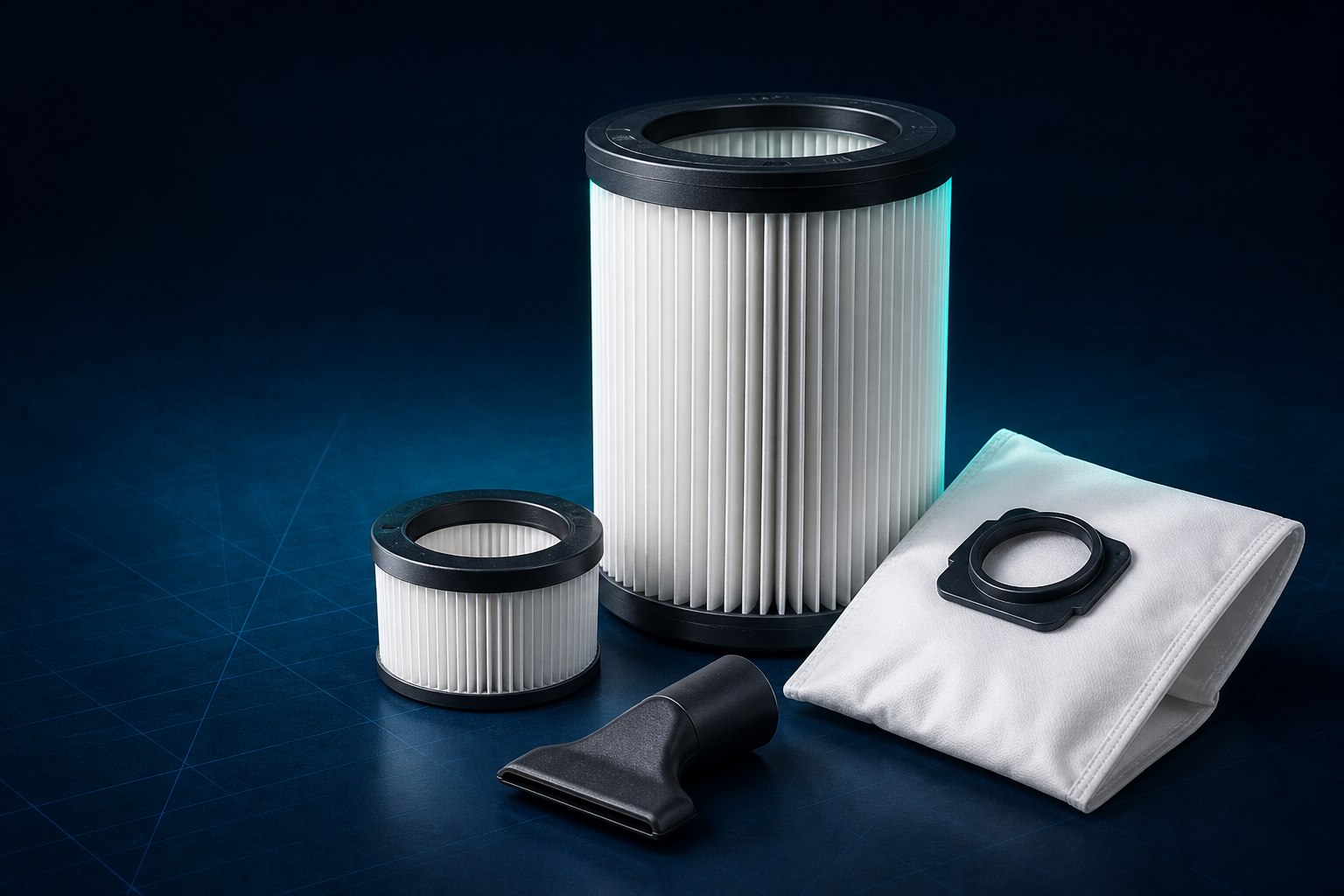
A wet/dry vacuum label does not make every filter suitable for every pickup condition. Fit, use, filtration, washability and service-life statements require an agreed construction and evidence basis.
WHO THIS PAGE IS FOR
This page organizes the product, application and commercial inputs a B2B buyer needs to define one real wet/dry vacuum replacement filter project.
Build a generic wet/dry vacuum filter range around verified dimensions, formats and intended use.
Review replacement filters for clearly defined debris, dust and liquid-pickup applications.
Align the filter construction, pack count, label and carton requirements before quotation.
Start from a filter sample, cage or housing dimensions, drawing or product requirement.
FILTER FORMATS
Shape is only the first decision. Media, mounting, sealing, intended pickup condition and maintenance requirements define the usable filter specification.
FORMAT 01
Cylindrical cartridge projects begin with height, inner and outer diameter, end-cap geometry, pleat construction and the intended pickup condition.
FORMAT 02
Foam sleeves can be reviewed for equipment-specific pre-filtration or liquid-pickup configurations where the vacuum design calls for that construction.
FORMAT 03
Flat and rectangular filters require finished dimensions, frame or gasket details, media construction and the available installation space.
APPLICATION-LED REVIEW
A replacement filter is not defined by one keyword. The usable specification combines geometry, media, mounting, sealing, pickup condition and maintenance expectations.
Send a filter briefRFQ INPUTS
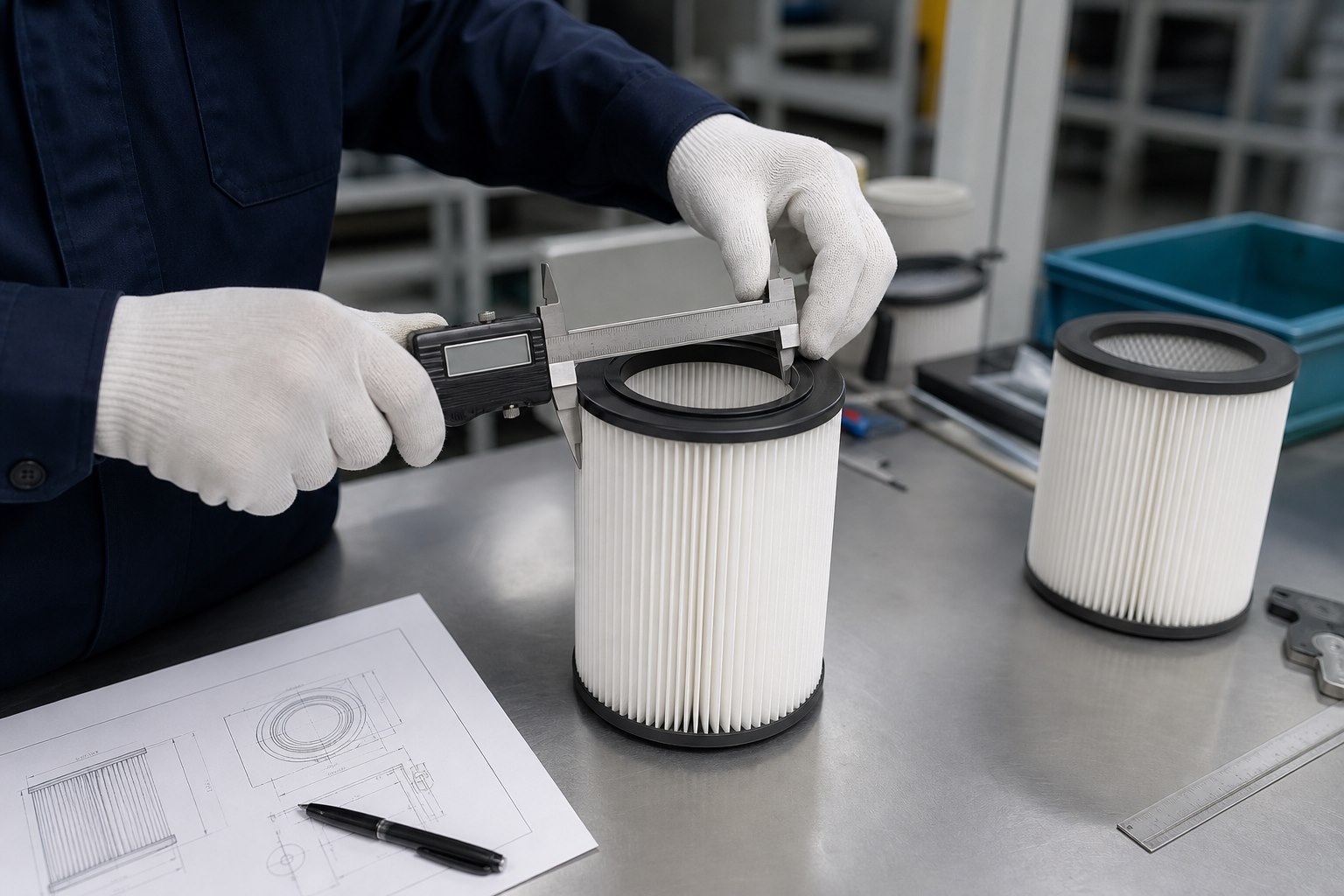
A complete drawing is helpful, but it is not required on day one. Begin with the filter and application information you already have.
PROJECT FLOW
Each step reduces ambiguity before tooling, sampling, packaging or bulk-order decisions are made.
Share dimensions, photos, a drawing, a cage or housing reference, or a physical sample.
Confirm the expected debris, dust or liquid-pickup use before selecting the construction.
Material, fit, sample terms and the approval basis are confirmed for the real project.
Once the specification is clear, we prepare the relevant commercial next step.
QUALITY WITHOUT OVERCLAIMING
The product description should follow the approved filter and application—not a generic efficiency or washability badge copied across every construction.
Finished geometry, tolerances, opening, cage, retainer and contact surfaces.
Media, pleats, foam, support layers, end caps, gasket and bonding.
Dry, fine-dust or liquid-pickup language follows the agreed application and evidence.
Pack count, label, carton, handling and market-specific presentation requirements.
BUYER QUESTIONS
These answers set the project boundary without inventing compatibility, performance, washability or fixed commercial terms.
The initial sourcing scope covers pleated cartridge filters, foam sleeves and flat pleated constructions. Final feasibility depends on the equipment geometry, mounting method, intended pickup condition, media, packaging and order requirements.
Not automatically. Wet/dry describes the equipment category, not universal suitability of every filter. The correct filter construction and setup must be confirmed for the vacuum design and intended pickup condition.
A dimensional drawing, filter sample, cage or housing reference and clear application information can be used as the project basis. Feasibility and fit follow a technical review and sample approval.
No. A pleated appearance does not prove a filtration grade. Any efficiency or rating statement must be tied to the agreed media, complete construction and supporting evidence for that project.
No blanket washability claim is made. Cleaning method, reuse and service-life language depend on the agreed media, end caps, bonding and the equipment instructions for the intended use.
Those details can be reviewed where the construction and commercial scope allow them. Dimensions, tooling, materials, tolerances and sample approval are confirmed before production.
Yes. Pack count, label, carton and insert requirements can be reviewed after the filter construction and order basis have been defined.
Send filter dimensions, photos or drawings, mounting and sealing details, intended pickup condition, target market, estimated quantity, pack configuration and any testing or documentation requirements.
START WITH THE FILTER AND USE
Tell us what you know today. XINFILT will use that information to frame the product, sample and commercial review.